College vs University: What the Difference Actually Is (US and UK)
College vs university: the real difference in the US and UK. Why the name is not a legal category in the US, and which one actually fits your degree plans.


School, college and university explained in plain language — grades, credits, scores and the choices between them.
College vs university: the real difference in the US and UK. Why the name is not a legal category in the US, and which one actually fits your degree plans.
How many credits to graduate? About 60 for an associate degree, 120 for a bachelor's, 30-60 for a master's - the totals catalogs publish, and the pace needed.
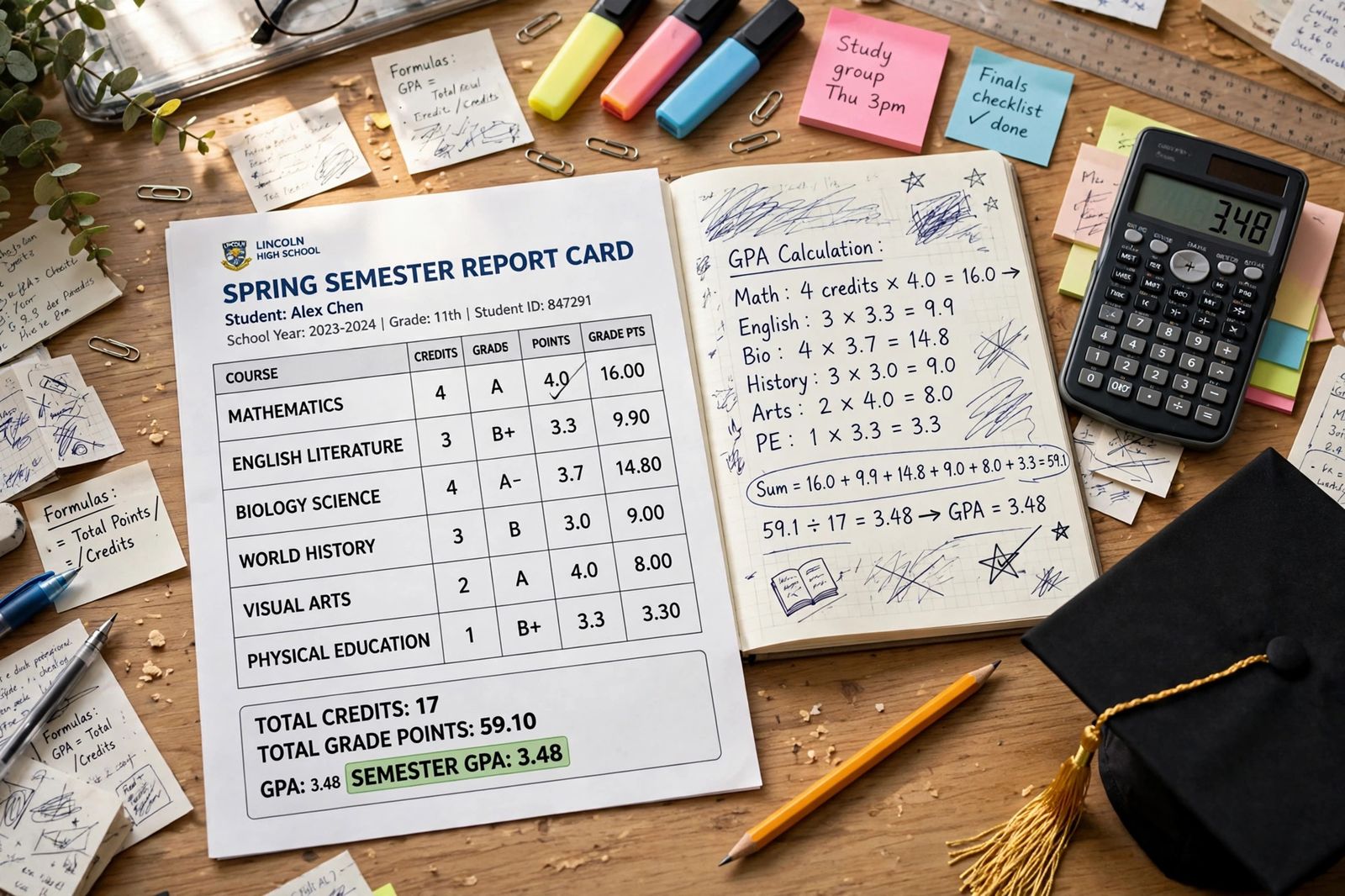
How to calculate GPA: turn grades into points, multiply by credits, add up, divide by total credits. Worked semester example, weighted GPA, and how to raise it.
Major vs minor in college: a major takes 30-60 credits and names your degree; a minor takes 15-24 and sits on your transcript. Requirements and real value.
SAT vs ACT on current official formats: the digital SAT (2h 14m, 400-1600) vs the enhanced ACT (2h 5m, 1-36). Timing, calculators, and how to choose.
Undergraduate vs graduate: the first level is associate and bachelor's degrees; graduate study starts after a bachelor's. Admission and funding compared.
What is a credit hour? One hour of class plus two hours of your own work weekly for about 15 weeks - the federal rule, real time costs, and full-time status.
What is a good SAT score? The class-of-2025 average is 1029; about 1200 beats three quarters of takers and 1350+ is near the top 10%. Percentiles explained.
What is plagiarism? Using another person's words, ideas, code or data without credit. Definitions, types including self-plagiarism, examples, and avoiding it.